Best Accounting Software for UK Freelancers in 2026
MTD is here, tax season never sleeps, and you'd rather be doing actual work than wrestling with spreadsheets. Here's an honest look at the six best accounting tools for UK freelancers — and the one that genuinely stands out.
If you're a UK freelancer, you already know the drill. You're the CEO, the marketing department, the customer service desk, and — whether you like it or not — the finance team. Keeping your books straight isn't optional anymore; it's a legal requirement. And with Making Tax Digital for Income Tax kicking in from 6 April 2026, the stakes just got a lot higher.
The good news? You don't need to be an accountant to stay compliant. The right software handles the heavy lifting — reconciling bank transactions, tracking expenses, generating invoices, calculating your tax liability, and filing directly with HMRC. The tricky bit is figuring out which tool actually delivers on those promises without charging you a fortune.
That's what this guide is for. After comparing features, pricing, and real-world usability, six platforms rose to the top. Let's break them down.
MTD for Income Tax is live from April 2026. If you're a sole trader or landlord with income over £50,000, you're required to keep digital records and submit quarterly updates to HMRC. The threshold drops to £30,000 in April 2027 and £20,000 in April 2028. Around 864,000 sole traders are affected in year one — make sure your software is compliant.
What Should Freelancers Actually Look For?
Before diving into the individual reviews, it's worth getting clear on what actually matters. Not every feature is relevant to every freelancer, but there's a core set of capabilities that separates genuinely useful software from glorified spreadsheets.
MTD compliance — Your software must be HMRC-recognised for Making Tax Digital. If it isn't, you'll need bridging software, which defeats the purpose. This is non-negotiable in 2026.
Invoicing — You need to send professional invoices quickly, track which ones are paid, and ideally chase overdue ones without doing it manually. UK sole traders are owed an average of £42,000 in overdue invoices, so this feature earns its keep.
Expense tracking — Receipt scanning, automatic categorisation, and mileage logging. The less manual work, the better.
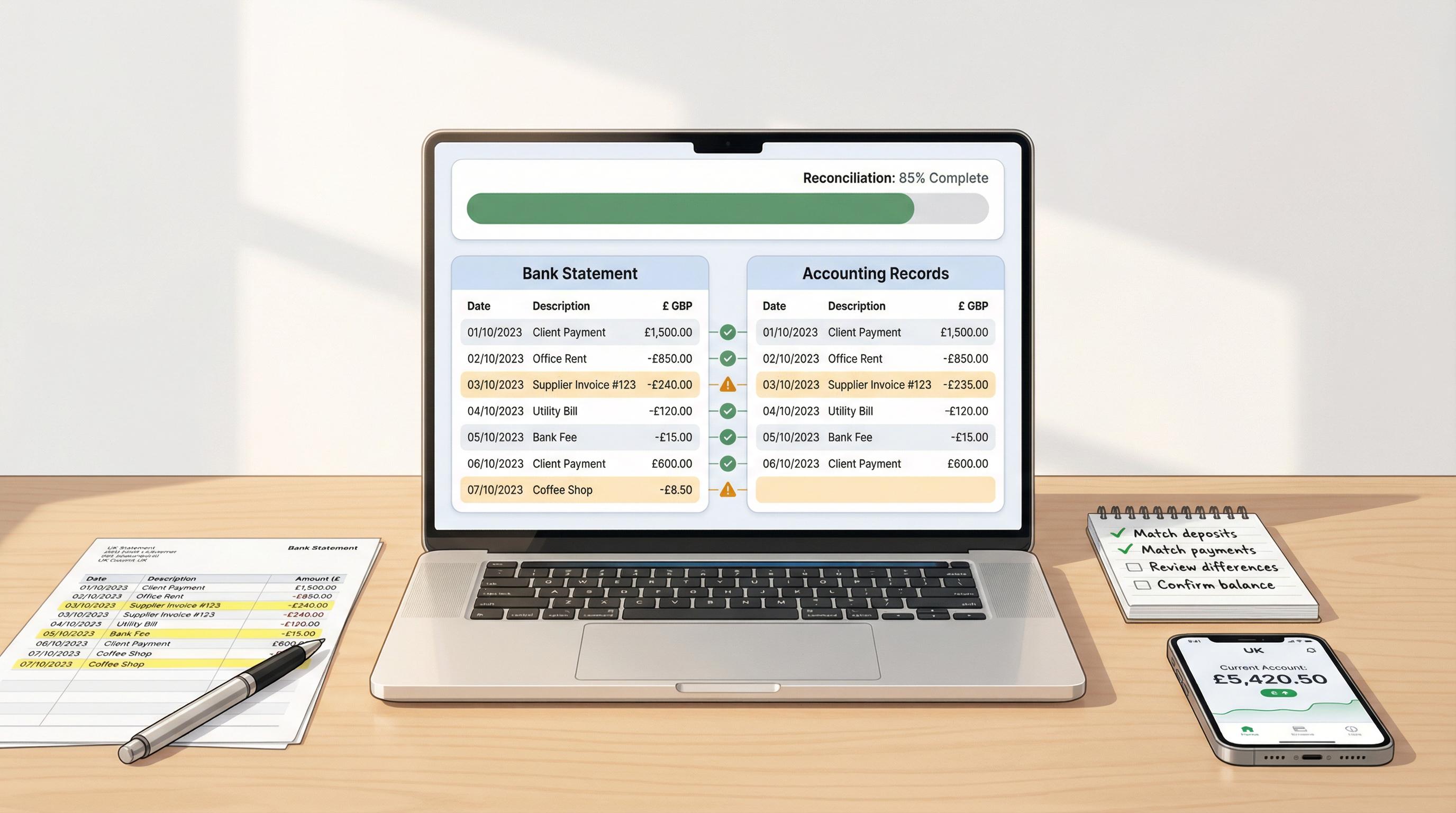
Bank feeds — Automatic transaction imports from your bank account. This alone can save hours each month compared to manual entry.
Tax estimates — Real-time estimates of your Income Tax and National Insurance liability. No more nasty surprises in January.
Self Assessment support — Direct filing to HMRC, or at minimum generating the figures your accountant needs.
VAT handling — If you're VAT-registered (threshold: £90,000), you'll need MTD-compliant VAT returns too.
With those boxes in mind, here's how the top six options stack up.
The Big Comparison: All Six at a Glance
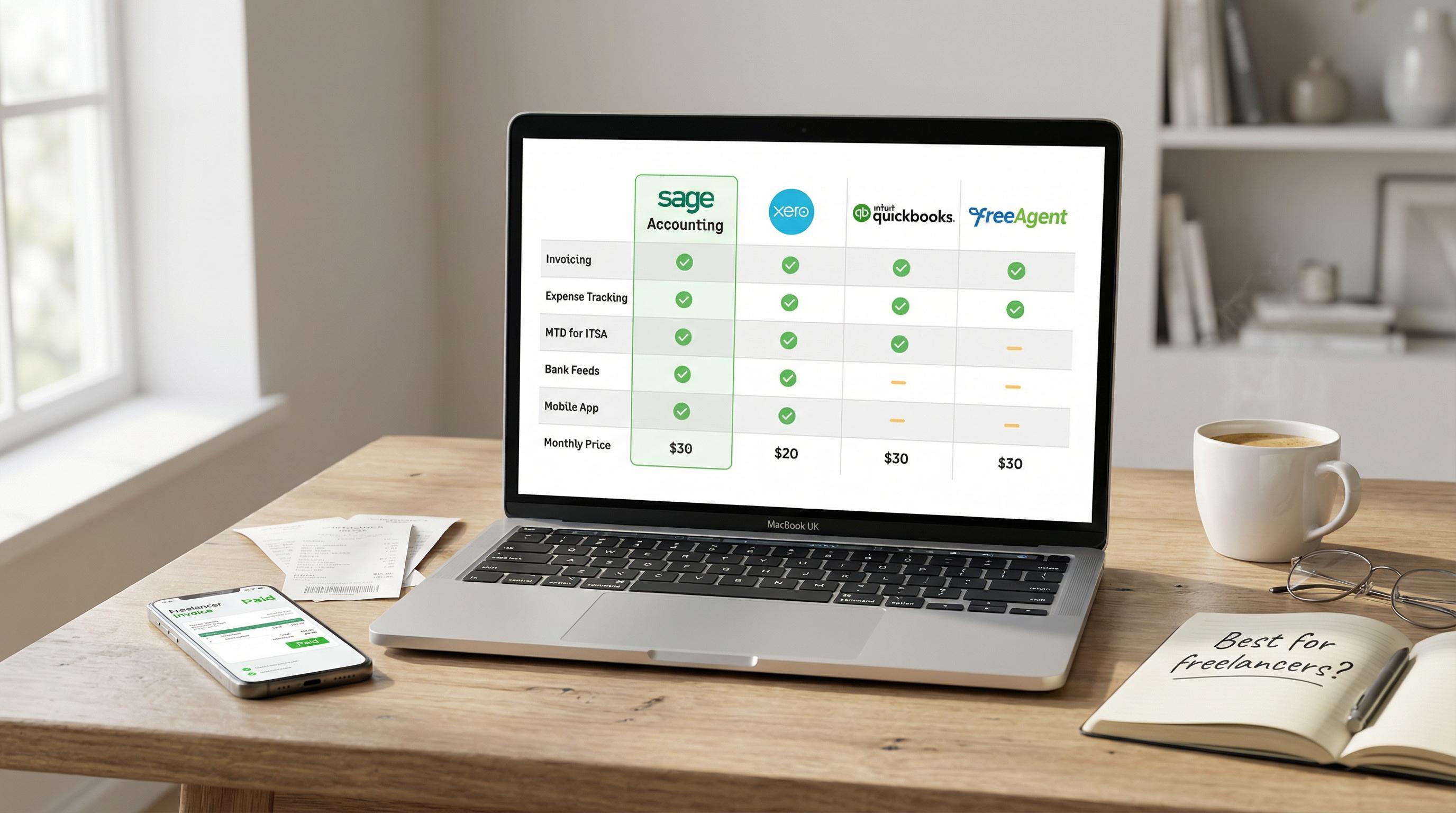
Software Price (per month) MTD Ready Invoicing Bank Feeds Payroll Best For Sage Accounting Top Pick Free – £18 ✅ Yes ✅ Unlimited* ✅ Yes ✅ Included All-round best value QuickBooks £10 – £16 ✅ Yes ✅ Yes ✅ Yes 💰 Add-on Sole traders wanting simplicity Xero From £16 ✅ Yes ⚠️ 20 invoices (Ignite) ✅ Yes 💰 Add-on Accountant-friendly ecosystem FreeAgent £33 (free with NatWest/RBS) ✅ Yes ✅ Unlimited ✅ Yes ✅ Included NatWest/RBS customers Coconut From £9 ✅ Yes ✅ Yes ✅ Yes ❌ No Mobile-first sole traders Wave Free ❌ Limited ✅ Unlimited ⚠️ Limited UK ❌ No Budget-conscious beginners
* Sage Individual Free plan includes 5 invoices/month; paid plans offer unlimited invoicing.
"The best accounting software is the one you'll actually use every week. If it feels like a chore, you'll fall behind — and falling behind means missed deductions, late filings, and unnecessary stress."
1. Sage Accounting Top Pick
Sage Accounting is the standout choice for UK freelancers in 2026, and it's not because of any single killer feature — it's the combination. A genuinely free plan for basic sole traders, AI-powered automation through Sage Copilot, full MTD compliance, and a promotional discount that makes the paid plans absurdly affordable for the first year.
Let's start with what makes Sage different: it's one of the few platforms offering a proper free tier that's actually useful. The Individual Free plan gives non-VAT sole traders MTD-ready digital records, five invoices per month, expense tracking, and bank feeds — at zero cost. For freelancers just starting out, that's hard to beat.
Sage Accounting Plans for Freelancers
Plan Standard Price Promo Price Key Features Individual Free £0/month — MTD ready, 5 invoices/month, bank feeds, expense tracking Individual £7/month £0.70/month for 12 months Unlimited invoices, AI categorisation, full reporting Start £18/month £1.80/month for 6 months VAT, payroll (1 employee), Copilot AI, MTD, quotes
That promotional pricing deserves a second look. The Individual plan at £0.70 per month for a full year is essentially a rounding error. And the Start plan — which includes VAT handling, payroll for one employee, and the full Copilot AI suite — drops to £1.80 per month for six months. You can check the current Sage pricing and promos here.
Sage Copilot: The AI Advantage
This is where Sage genuinely pulls ahead. Copilot is an AI assistant baked directly into the accounting workflow — not a bolt-on chatbot, but a tool that actively drafts invoices, chases late payments, flags anomalies, and generates reports on a schedule. Sage's own data suggests it saves users around 12 hours per week across invoice creation, payment chasing, report automation, and admin tasks.
For freelancers specifically, the most valuable Copilot features are:
Payment chasing — Identifies overdue invoices and drafts chase emails automatically, saving roughly 2.1 hours per week
Receipt categorisation — Snap a photo of a receipt and AI categorises it correctly
VAT insights — Tracks your proximity to the £90,000 threshold, sends deadline reminders, and cuts VAT admin time by up to 75%
Cash flow forecasting — Forward-looking projections based on open invoices and upcoming bills
Anomaly detection — Flags unusual transactions or potential errors before they snowball
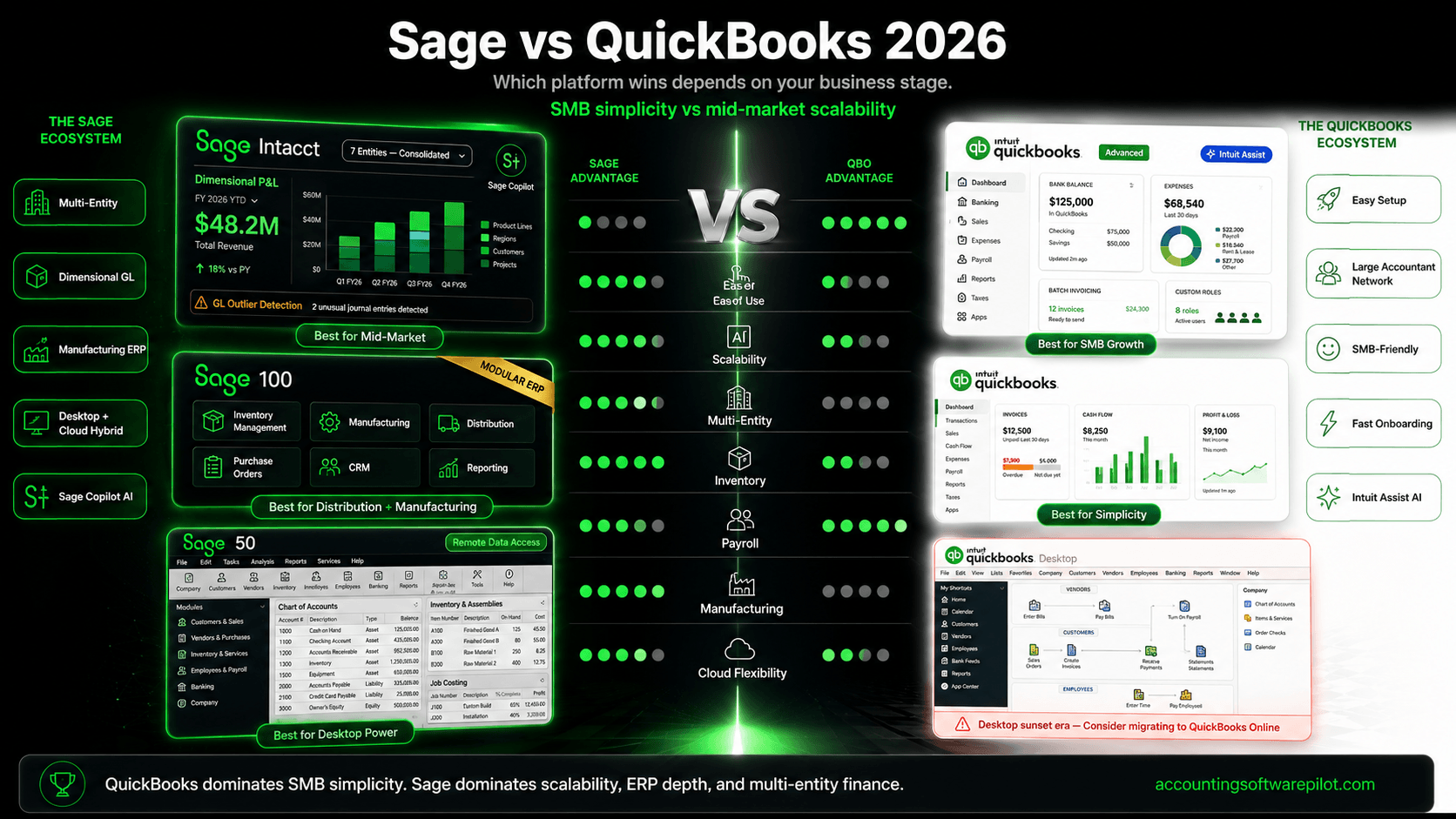
No other platform in this price range offers anything comparable. QuickBooks and Xero both have AI features, but they're either less mature or restricted to higher-priced plans.
Best deal in 2026: Sage is currently running a 90% off promotion on its paid plans. The Individual plan drops to just £0.70/month for 12 months, and the Start plan to £1.80/month for 6 months. See the latest Sage offers.
Who Sage Is Best For
Sage suits the widest range of freelancers. If you're a non-VAT sole trader who sends fewer than five invoices monthly, the free plan covers you. If you need unlimited invoices and smarter categorisation, the £7/month Individual plan is a steal — especially at £0.70 during the promo. And if you're VAT-registered or need payroll, the Start plan packs in more than competitors charging twice the price.
The only scenario where Sage might not be your first choice is if your accountant insists on Xero (some do) or if you bank with NatWest/RBS and want FreeAgent for free. Beyond those edge cases, Sage Accounting is the best all-rounder.
2. QuickBooks
QuickBooks is the global heavyweight, and for good reason. Intuit has poured serious resources into making its UK product compliant and capable. For freelancers, the two relevant plans are Sole Trader (£10/month) and Simple Start (£16/month).
The Sole Trader plan is designed for non-VAT freelancers who need Self Assessment support. You get bank feeds, receipt scanning, mileage tracking, income tax estimates, and basic invoicing. It's clean, well-designed, and easy to pick up even if you've never used accounting software before.
Simple Start adds VAT tracking and submission, CIS support, cash flow insights, and pay-enabled invoices. It's the one to choose if you're approaching the VAT threshold or need to submit VAT returns.
Where QuickBooks falls short for freelancers: Payroll is always a paid add-on, never included. The AI features are less developed than Sage Copilot. And at full price, the Sole Trader plan costs £10/month for capabilities you can get free with Sage's Individual Free tier. QuickBooks does run its own 90% promotional discount for the first six months, but the ongoing price is higher.
That said, QuickBooks has a massive ecosystem — loads of third-party integrations, a huge accountant network, and polished mobile apps. If you've used it before and know the interface, there's something to be said for sticking with what works.
3. Xero
Xero is beloved by accountants. If you work with a bookkeeper or accountant, there's a decent chance they'll recommend Xero because it's what they know and it offers excellent multi-user collaboration. The entry-level UK plan is Ignite at £16/month.
Here's the catch: Xero's Ignite plan caps you at 20 invoices and 10 bills per month. For many freelancers, that's plenty. But if you send more than 20 invoices — which isn't unusual for consultants billing weekly or designers with multiple retainer clients — you'll need to jump to Grow at £37/month. That's a significant price hike.
On the plus side, Xero's bank reconciliation is excellent, the interface is clean, and its app marketplace is enormous. MTD compliance is solid across all plans. And Xero regularly runs its own promotions — currently 95% off for six months, which brings Ignite down to £0.80/month during the introductory period.
The verdict: Xero is a strong choice if your accountant prefers it, or if you need the depth of its app integrations. But for a solo freelancer managing their own books, Sage offers more features at a lower ongoing price — especially when you factor in the invoice caps and payroll exclusions.
4. FreeAgent
FreeAgent is a genuinely excellent UK-focused product. Built from the ground up for freelancers, sole traders, and small limited companies, it handles Self Assessment, Corporation Tax estimates, VAT, payroll, project tracking, and time logging. The interface is thoughtful and the UK tax logic is deeply integrated.
The standard price is £33/month (currently 50% off at £16.50/month for the first six months). That's not cheap. But here's the thing: if you bank with NatWest, RBS, or Ulster Bank, you get FreeAgent completely free. It's been part of NatWest's business banking offer for years, and it's a remarkable deal if it applies to you.
Free with NatWest/RBS: If you hold a business current account with NatWest, Royal Bank of Scotland, or Ulster Bank, you can access FreeAgent at no cost. This makes it one of the best-value options available — provided you're willing to bank with one of those institutions.
FreeAgent's biggest strength is its UK-specific tax intelligence. It understands dividend taxation, employer's NI, and Corporation Tax in a way that some of the bigger international platforms still handle clumsily. For limited company directors paying themselves a salary-plus-dividends structure, FreeAgent is arguably the most intuitive option.
The catch: At full price (£33/month), FreeAgent costs more than Sage Start (£18/month) while offering less AI automation and no equivalent to Copilot. The NatWest deal changes the equation entirely, but only for qualifying customers.
5. Wave
Wave is the go-to recommendation in "free accounting software" lists, and for good reason — the core accounting and invoicing features are genuinely free with no time limits or artificial caps. For freelancers in the US and Canada, it's a no-brainer. But for UK users, the picture is more complicated.
Wave doesn't offer native MTD-compliant VAT submissions. Its bank feed connections work well with major UK banks, but the coverage isn't as comprehensive as Sage, Xero, or QuickBooks. There's no payroll for UK users. And the platform's development focus has historically leaned North American — HMRC integrations feel like an afterthought rather than a priority.
If you're a very early-stage freelancer who isn't VAT-registered, doesn't need MTD for Income Tax yet, and primarily needs invoicing and basic bookkeeping, Wave can work. But the moment your needs grow — and they will — you'll likely outgrow it.
Better alternative: Sage's Individual Free plan offers similar core features but with proper MTD compliance and UK-specific tax support built in. It's free too, but actually designed for UK sole traders.
6. Coconut
Coconut takes a different approach. It started life as a business current account with built-in accounting, specifically targeting sole traders and freelancers. While the banking element has evolved, the core product remains a mobile-first accounting app designed for people who hate accounting.
Plans start from £9/month, and the app handles income tracking, expense categorisation, tax estimates, and MTD compliance. The interface is deliberately simple — more like a banking app than traditional accounting software. For freelancers who do most of their admin on their phone, Coconut's design philosophy is appealing.
However, Coconut has a narrower feature set than the bigger platforms. There's no built-in payroll, limited integrations, and the reporting capabilities are basic compared to Sage or Xero. It's also worth noting that Coconut underwent some ownership changes in recent years, which gave some users pause about long-term stability.
Best for: Sole traders who want a dead-simple, mobile-first experience and don't need payroll or advanced reporting. If you primarily work from your phone and have straightforward finances, Coconut's simplicity is a feature, not a limitation.
"Don't overcomplicate it. Pick software that handles MTD, connects to your bank, and lets you send invoices. Everything else is a bonus — but those three are non-negotiable in 2026."
Feature Checklist: What Each Platform Covers
This table goes deeper than the comparison above. If there's a specific feature you can't live without, this is where you'll find it.
Feature Sage QuickBooks Xero FreeAgent Coconut Wave MTD for Income Tax ✅ ✅ ✅ ✅ ✅ ❌ MTD for VAT ✅ ✅ ✅ ✅ ✅ ❌ Self Assessment support ✅ ✅ ✅ ✅ ✅ ⚠️ Unlimited invoices ✅ (paid plans) ✅ ⚠️ (20 on Ignite) ✅ ✅ ✅ Bank feeds ✅ ✅ ✅ ✅ ✅ ⚠️ Receipt scanning ✅ ✅ ✅ ✅ (add-on) ✅ ❌ AI automation ✅ Copilot ⚠️ Basic ⚠️ Basic ❌ ❌ ❌ Payroll (included) ✅ (Start+) ❌ (add-on) ❌ (add-on) ✅ ❌ ❌ Mileage tracking ✅ ✅ ⚠️ (via app) ✅ ✅ ❌ Multi-currency ✅ (Plus plan) ✅ (Essentials+) ✅ (Grow+) ✅ ❌ ❌ Free plan available ✅ ❌ ❌ ❌* ❌ ✅ Mobile app ✅ ✅ ✅ ✅ ✅ ✅
* FreeAgent is free for NatWest, RBS, and Ulster Bank business account holders. Standard price is £33/month.
How to Choose: A Quick Decision Framework
Still not sure? Here's a simple way to think about it:
You want the best all-round value → Sage Accounting. Free tier for basics, affordable paid plans, Copilot AI, and full MTD compliance. It covers the widest range of freelancer needs at the lowest cost.
You bank with NatWest or RBS → FreeAgent. It's free with those banks and deeply UK-focused. Hard to argue with that price.
Your accountant insists on a specific platform → Ask them. If they use Xero Practice Manager, Xero might be the path of least resistance. Same with QuickBooks ProAdvisor accountants.
You're just starting out and need something free → Sage Individual Free or Wave. Sage is the better option for UK compliance; Wave works if you're pre-MTD.
You live on your phone → Coconut. Its mobile-first design is its biggest strength.
You want maximum simplicity for non-VAT Self Assessment → QuickBooks Sole Trader at £10/month is clean and straightforward.
The MTD Factor: Why Compliance Isn't Optional
This deserves its own section because it's the single biggest change affecting UK freelancers in 2026. Making Tax Digital for Income Tax requires sole traders and landlords earning over £50,000 to maintain digital records and submit quarterly updates to HMRC. That threshold drops to £30,000 in April 2027 and £20,000 in April 2028.
According to Sage's own research, 70% of sole traders aren't ready for MTD. That's a staggering number considering the penalties for non-compliance. If you're still using spreadsheets or paper records, now is the time to switch — not because software companies want your money, but because HMRC literally requires it.
MTD for Income Tax Timeline
6 April 2026 — Sole traders and landlords with income over £50,000
April 2027 — Income over £30,000
April 2028 — Income over £20,000
Approximately 864,000 sole traders are affected in the first wave. You'll need HMRC-recognised software to submit quarterly updates and an end-of-period statement.
Every platform in this list except Wave offers solid MTD compliance. But Sage deserves particular credit here: it's been HMRC-recognised for years, and even the free plan is MTD-ready. You don't need to pay a penny to meet your legal obligations.
A Note on Pricing and Promotions
Every software provider on this list runs introductory discounts. Xero is currently offering 95% off for six months. QuickBooks runs 90% off for six months. Sage offers 90% off across its paid plans. These promotions make the first few months nearly free everywhere.
The difference shows up after the promotional period ends. That's when ongoing costs matter:
Sage Individual: £7/month — and you can start on the free plan indefinitely
QuickBooks Sole Trader: £10/month
Coconut: From £9/month
Xero Ignite: £16/month (with invoice caps)
QuickBooks Simple Start: £16/month
Sage Start: £18/month (includes payroll and Copilot AI)
FreeAgent: £33/month (or free with NatWest/RBS)
When you weigh features against post-promo pricing, Sage consistently offers the most per pound. The Start plan at £18/month includes VAT handling, payroll, and Copilot AI — features that cost extra or aren't available at all with competitors at similar price points.
Final Verdict
There's no single "right" answer for every freelancer, but there is a clear frontrunner. Sage Accounting earns the top recommendation because it offers the widest range of features at the most competitive price, from a genuinely free MTD-ready plan all the way up to a full-featured option with AI automation and payroll. The Copilot AI capabilities are a genuine differentiator — not marketing fluff — and the current promotional pricing makes it even more compelling.
FreeAgent is the pick if you bank with NatWest or RBS. Xero is the choice if your accountant requires it. QuickBooks is solid if you already know the interface. But for most UK freelancers starting fresh in 2026, Sage gives you the most flexibility, the best technology, and the clearest path to staying compliant without overspending.
The average UK sole trader spends £753 per year on compliance. With Sage's free plan or promotional pricing, you can slash that figure dramatically — and spend your time doing the work that actually earns you money.
This article contains affiliate links. If you sign up for Sage through our links, we may earn a commission at no extra cost to you. All opinions are based on independent research and genuine product evaluation. Pricing information is accurate as of March 2026 and subject to change — always check the provider's website for the latest figures. This content is for informational purposes only and does not constitute financial or tax advice.