There's a particular kind of business crisis that doesn't announce itself. Sales look good. Clients are happy. The P&L shows a profit. And then one morning you open your banking app and realise there isn't enough money to cover this week's payroll. It's not a rare scenario. It's one of the most common ways UK small businesses get into serious trouble.
Cash flow problems don't usually arrive because the business is failing. They arrive because the timing of money coming in doesn't match the timing of money going out. A large invoice sits unpaid for 60 days. A VAT bill lands in the same week as rent. A seasonal dip hits harder than expected. By the time you notice, your options are already limited.
Cash flow forecasting is the tool that stops this from happening by surprise. It won't eliminate every problem, but it gives you the ability to see what's coming before it hits and make decisions while you still have time. This guide explains how it works, why it matters, and how to build a forecast that actually helps you run a better business.
Why cash flow forecasting matters for UK small businesses
The statistics around cash flow in the UK paint a stark picture. Around 42% of UK SMEs have been unable to pay staff on time because of late payments from their own customers. Approximately 14,000 businesses close every year because of cash flow issues caused by late payments alone, which works out to roughly 38 businesses every single day.
And those numbers don't capture the full picture. An estimated 50,000 UK businesses fail each year due to cash flow problems more broadly, encompassing not just late payments but also poor planning, seasonal misjudgements, and over-commitment to expenses that couldn't be supported by the cash actually available.
The common thread in almost all of these failures isn't that the business was unprofitable. It's that the owner didn't see the cash gap coming in time to do anything about it. A forecast changes that. Even a basic one gives you a forward view of when cash might be tight and helps you take action weeks or months in advance rather than days or hours.
The difference between cash flow and profit
This is the concept that catches most business owners off guard, and it's essential to understand before building a forecast. Profit and cash flow are not the same thing. They're related, but they measure different things and they move at different speeds.
What profit tells you
Profit is an accounting measure. It tells you whether your revenue exceeded your expenses during a given period. Under accrual accounting, which most UK businesses use, revenue is recorded when it's earned and expenses are recorded when they're incurred, regardless of when the money actually moves. That means your P&L can show a healthy profit even when your bank account is nearly empty.
What cash flow tells you
Cash flow tracks the actual movement of money in and out of your bank account. It doesn't care about invoices you've sent but haven't been paid for. It doesn't care about expenses you've committed to but haven't settled yet. It only measures what's actually happened or, in the case of a forecast, what's expected to happen in cash terms.
A business can be profitable and cash-poor at the same time. If you've invoiced £50,000 this month but only collected £20,000 so far, your P&L might look strong while your bank balance tells a very different story. Forecasting bridges that gap by focusing on when cash will actually arrive and leave.
How to build a basic cash flow forecast
A cash flow forecast doesn't need to be complicated. At its simplest, it's a forward-looking schedule that estimates the cash you expect to receive, the cash you expect to pay out, and the resulting balance at the end of each week or month. Here's how to build one from scratch.
Step one: choose your time frame and frequency
Most small businesses benefit from a 13-week rolling forecast updated weekly, or a 12-month forecast updated monthly. The shorter the time frame, the more accurate the numbers tend to be. If cash is already tight, a weekly forecast over the next quarter gives you the most actionable view. If you're planning ahead for growth, a monthly forecast over 12 months is more practical.
Step two: list your expected cash inflows
Start with what you know. Look at your outstanding invoices and their expected payment dates. Add any recurring income such as subscription payments or retainer fees. Then estimate new sales based on your pipeline and historical patterns. Be realistic. If your average customer pays 15 days after the due date, don't assume they'll pay on time in your forecast.
With 62.6% of UK invoices being paid late and the average delay running at 32 days, building some slippage into your inflow estimates isn't pessimism. It's accuracy.
Step three: list your expected cash outflows
Map out everything you expect to pay during the forecast period. This includes rent, salaries, supplier invoices, loan repayments, tax payments, VAT, pension contributions, insurance, subscriptions, and any planned one-off purchases. Fixed costs are straightforward to forecast because they don't change much. Variable costs, such as materials and shipping, need to be estimated based on your expected activity.
Don't forget the payments that only come around occasionally: annual insurance renewals, quarterly VAT bills, corporation tax instalments, and annual software subscriptions. These lumpy outflows are often the ones that catch people out.
Step four: calculate your running balance
For each period, take your opening cash balance, add your expected inflows, and subtract your expected outflows. The result is your closing balance for that period, which becomes the opening balance for the next one. This running total is the heart of the forecast. It shows you, at a glance, when your cash position might dip below a comfortable level.
Step five: update regularly
A forecast is only useful if it reflects current reality. Update it weekly or monthly with actual figures, replacing estimates with real numbers as they come in. Adjust your forward projections based on what's changed. The more disciplined you are about updating, the more reliable the forecast becomes over time.
A cash flow forecast doesn't predict the future perfectly. It shows you what's likely to happen if current patterns continue, and that's enough to make smarter decisions before problems become emergencies.
Common cash flow forecasting pitfalls
Building a forecast is relatively straightforward. Keeping it honest and useful is where most businesses stumble. Here are the mistakes that undermine even well-intentioned forecasts.
Being too optimistic about payment timing. If your customers regularly pay late, your forecast should reflect that. Assuming on-time payment when your experience says otherwise will overstate your cash position and leave you exposed. Use your real debtor days, not your invoice terms, as the basis for inflow timing.
Forgetting irregular expenses. Annual subscriptions, quarterly tax bills, seasonal stock purchases, and one-off capital costs can all create sudden cash dips. If they're not in the forecast, you won't see them coming. Go through your bank statements for the past year and flag every non-monthly payment.
Not updating the forecast. A forecast created in January and never touched again is useless by March. Circumstances change. Invoices slip. Costs arrive early. The forecast needs to be a living document that evolves with the business, not a one-time exercise filed away and forgotten.
Confusing committed and speculative income. There's a big difference between an invoice you've already sent and a deal you hope to close next month. Your forecast should separate confirmed inflows from projected ones, or at minimum apply a confidence discount to anything that hasn't been invoiced yet.
Ignoring VAT timing. VAT can create significant cash flow swings, especially for businesses on quarterly returns. You collect VAT on your sales and pay it on your purchases, but the net amount you owe HMRC might be due all at once. If you haven't set that cash aside throughout the quarter, the VAT payment can feel like a sudden hit.
Treating the forecast as just a finance task. Cash flow is affected by sales, operations, procurement, and HR decisions. A forecast that only lives in the finance function will miss critical information. The people spending money and closing deals should be involved in keeping the forecast current.
Seasonal considerations for UK businesses
The UK business calendar has its own rhythm, and your cash flow forecast needs to account for it. Ignoring seasonality is one of the fastest ways to build a forecast that looks fine on paper but falls apart in practice.
Quiet periods and revenue dips
Many businesses experience quieter trading in January, after the Christmas rush, and again during the summer months when clients and customers are on holiday. If your revenue drops by 20% to 30% during these periods but your fixed costs stay the same, the cash impact can be substantial. Your forecast should model these seasonal dips explicitly rather than assuming flat revenue across the year.
Tax and compliance deadlines
The UK tax calendar creates predictable cash outflows that must be planned for. Corporation tax, VAT returns, PAYE, and Self Assessment all have fixed due dates. With Making Tax Digital for Income Tax Self Assessment becoming mandatory from April 2026 for those with income over £50,000, quarterly digital submissions will add another layer of regularity to financial administration. Building these dates into your forecast ensures you're not caught off guard.
Stock and inventory cycles
Product-based businesses often need to invest heavily in stock ahead of busy periods. If you're buying inventory in September for a Christmas rush, the cash goes out months before the corresponding revenue arrives. Without forecasting this gap, you might find yourself cash-poor at exactly the moment you need to be investing in growth.
Weather and external factors
Some UK sectors are directly affected by weather and seasonal conditions: construction slows in winter, tourism peaks in summer, and retail has its own distinct cycles. If your business is sensitive to these patterns, historical data from previous years is your best guide for building realistic seasonal adjustments into your forecast.
How software helps with cash flow forecasting
You can build a cash flow forecast in a spreadsheet, and many businesses start there. But as your transaction volume grows and your cash movements become more complex, manual forecasting becomes harder to maintain accurately. Spreadsheets require constant updating, they're prone to formula errors, and they can't pull in live data from your bank or accounting records.
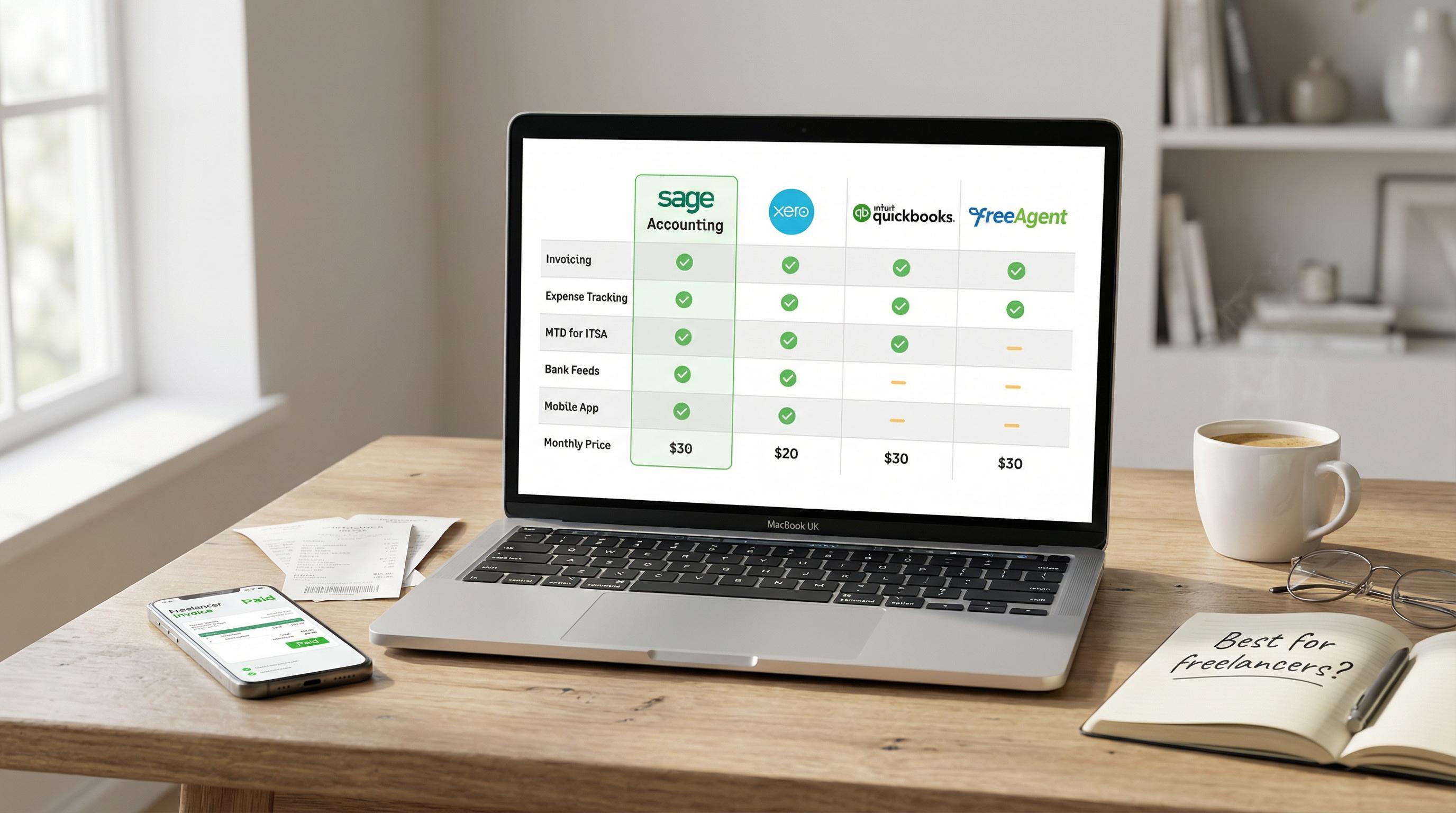
That's where purpose-built tools earn their value. Tools like Sage Accounting include built-in cash flow forecasting features that connect directly to your invoices, bills, and bank transactions. Instead of manually entering every expected inflow and outflow, the software can pull from your existing data and project forward based on real patterns. This saves time and reduces the risk of building a forecast on outdated or incorrect assumptions.
The advantage isn't just efficiency. It's visibility. When your forecast updates automatically based on live data, you're always working with the most current picture of your cash position. That makes it far easier to spot potential problems early and take action before they become urgent.
What to do when the forecast shows a problem
The whole point of forecasting is to give you time to act. If your forecast shows a period where cash might run dangerously low, you have several options, and the earlier you spot the issue, the more options you'll have.
Accelerate inflows
Chase outstanding invoices more aggressively. Offer early payment discounts if the maths works. Invoice immediately upon completing work rather than waiting until the end of the month. Even small improvements in payment timing can make a meaningful difference to your cash position.
Delay or renegotiate outflows
Talk to suppliers about extending payment terms. Defer non-essential spending. Spread large purchases over multiple periods. Most suppliers would rather renegotiate than lose a customer, so don't assume your current terms are fixed.
Arrange funding in advance
If you know a cash gap is coming, arranging an overdraft or short-term finance now is far easier and cheaper than scrambling for it in a crisis. Lenders are more willing to help when you can show them a forecast that demonstrates the shortfall is temporary and manageable.
Adjust your plans
Sometimes the forecast tells you that a planned investment, hire, or expansion isn't affordable right now. That's not a failure. That's the forecast doing exactly what it's supposed to do: giving you the information to make a better decision with the cash you actually have.
Building the forecasting habit
Cash flow forecasting isn't a one-off project. It's a habit. The businesses that manage cash well aren't the ones with the most sophisticated models. They're the ones that look at their numbers regularly, update their assumptions honestly, and act on what the forecast tells them.
Start simple. A 13-week rolling forecast, updated weekly, is enough for most small businesses. As you get more comfortable, extend the time frame and add more detail. The important thing is consistency. A basic forecast updated every week is infinitely more valuable than a detailed one that was built six months ago and never touched again.
The UK business environment is full of cash flow pressures: late-paying customers, lumpy tax bills, seasonal swings, and rising costs. You can't control all of those things. But you can stop them from catching you by surprise. A good forecast is how you do that.
This article is for informational purposes only and does not constitute legal, tax, or financial advice. For guidance specific to your circumstances, consult a qualified accountant or financial adviser.