Why Your Business Profit Feels Wrong: Common Reasons Your P&L Doesn't Match Your Bank Balance
Your accounts say you're profitable. Your bank account says otherwise. Here's why both numbers are right — and what you can actually do about it.
You're Not Going Mad — This Happens to Almost Everyone
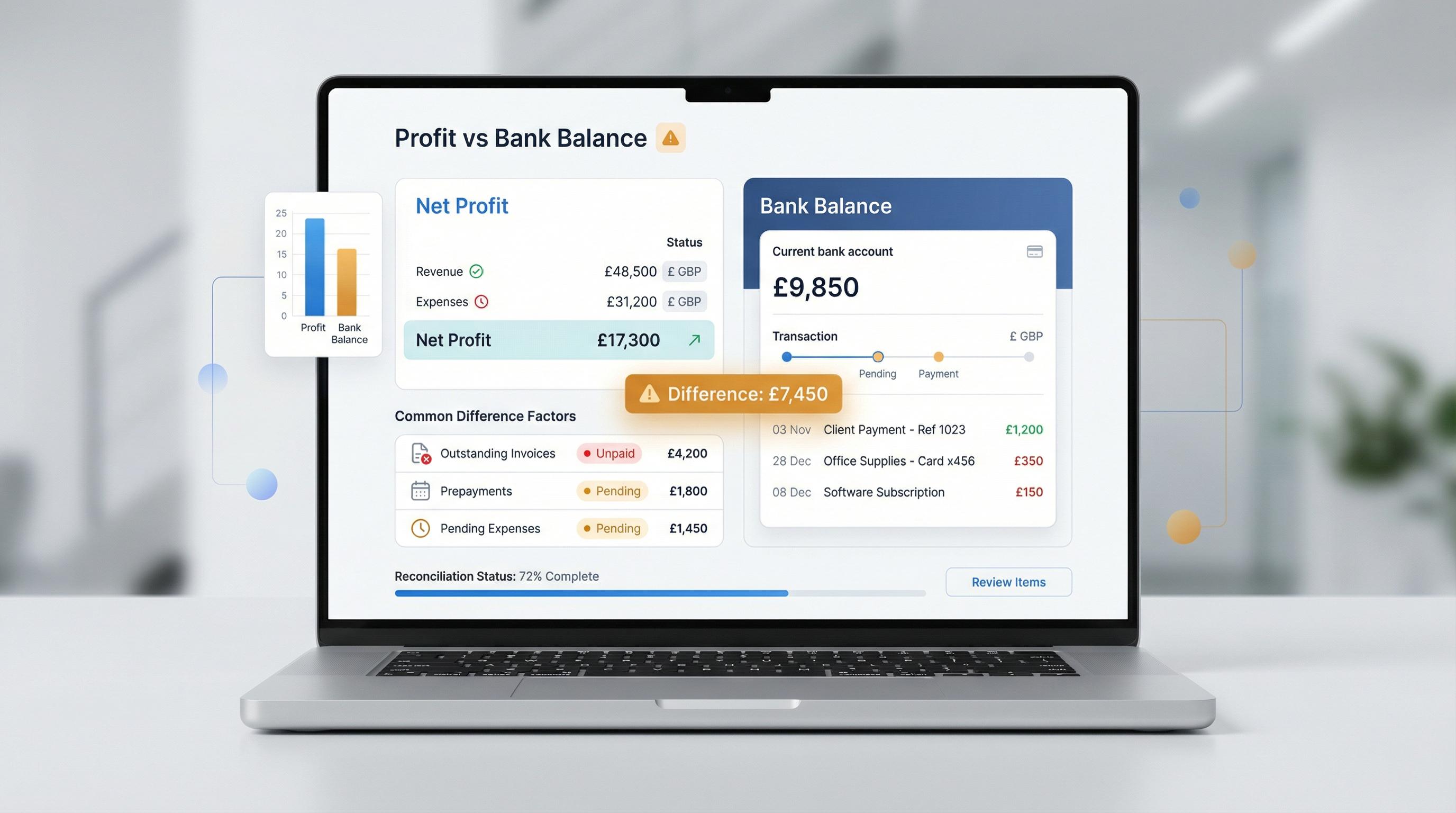
Let's start with the good news: if you've ever stared at a profit and loss report showing a healthy profit, then opened your banking app to find a far less impressive number, you're not alone. You're not bad with money. You haven't made a terrible mistake. And your accountant probably hasn't got it wrong.
This disconnect between reported profit and actual cash in the bank is one of the most common frustrations in small business. It hits sole traders, limited companies, partnerships — everyone. And it's not a bug in the system. It's a feature of how accounting actually works.
"The P&L says I made £15,000 profit last quarter. There's £3,200 in the bank. Where's the rest of my money gone?"
Sound familiar? That's the question this article is going to answer — properly, in plain English, with real numbers. By the end, you'll understand exactly why profit and cash are two different things, where your money actually goes, and how to keep tabs on both without losing sleep.
How Profit Is Calculated vs. How Cash Moves
The fundamental issue is this: your P&L and your bank account are measuring two completely different things.
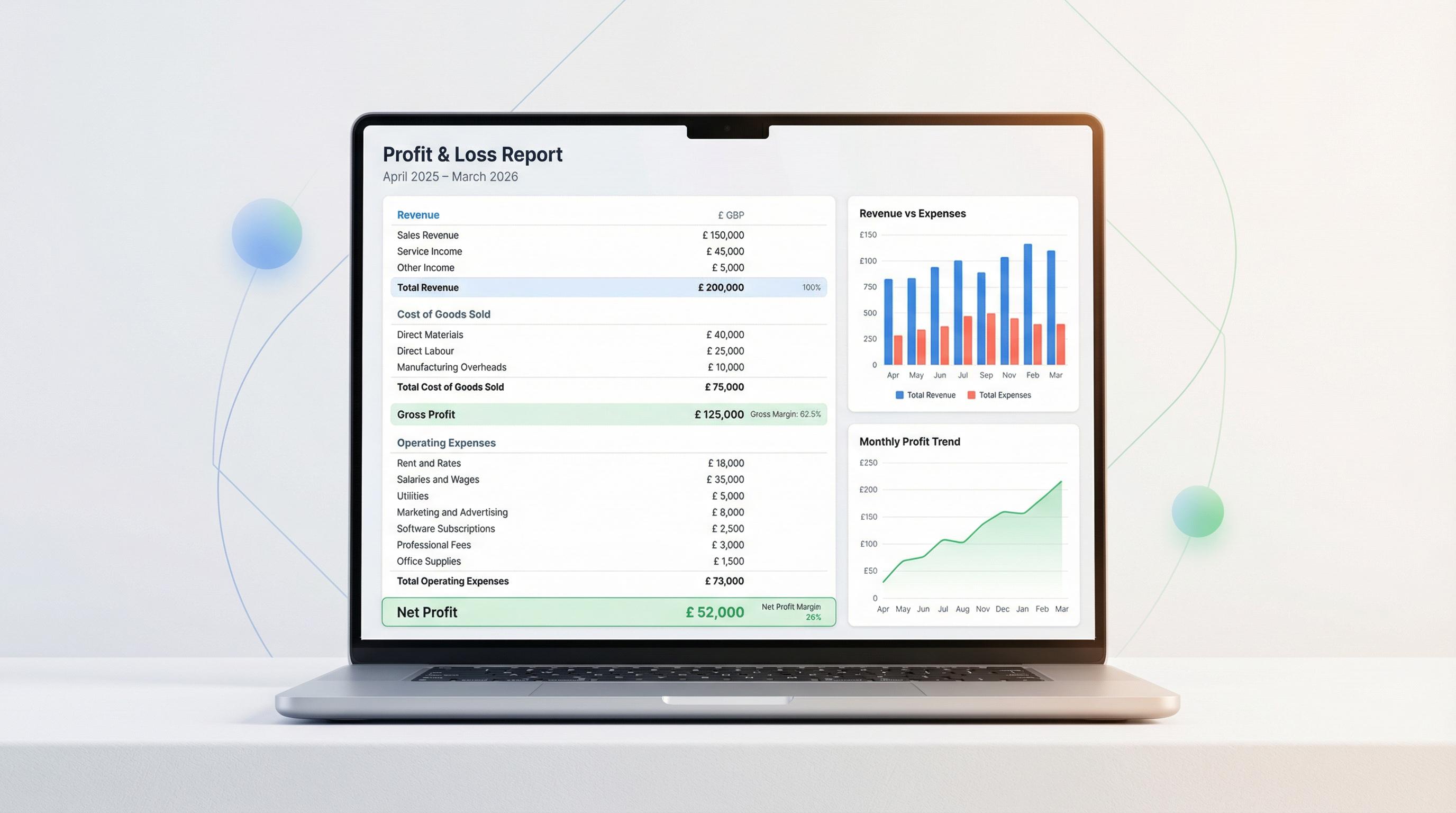
Your profit and loss statement measures whether your business activities are economically viable. Did you earn more than you spent? Over a given period, are you generating value?
Your bank balance measures something much simpler: how much money is physically sitting in your account right now.
These two numbers can — and usually do — tell very different stories. A business can be profitable on paper and completely skint in reality. A business can also have loads of cash in the bank while technically running at a loss (perhaps because a large payment arrived early, or a tax refund landed).
Key insight: Profit measures economic performance. Cash measures liquidity. They're connected, but they move at different speeds, follow different rules, and are affected by different transactions. Understanding this distinction is the single most important thing you can learn about your business finances.
Accrual Accounting Explained Simply
Most of this confusion comes down to something called accrual accounting — and it's simpler than it sounds.
Under accrual accounting, you record revenue when you earn it, not when the customer pays you. You record expenses when you incur them, not when the money leaves your account.
So if you send an invoice for £5,000 on 1st March, that £5,000 shows up as revenue on your P&L for March — even if your customer doesn't actually pay until 15th May. As far as your profit report is concerned, you earned it in March. As far as your bank is concerned, nothing happened until May.
The alternative is cash basis accounting, where you only record things when money actually moves. It's simpler, and HMRC allows sole traders and small businesses under the VAT threshold to use it. But most limited companies, VAT-registered businesses, and anyone who wants a more accurate picture of business performance will be on accrual accounting — which is where the confusion creeps in.
Quick comparison:
Accrual accounting: Revenue recorded when earned. Expenses recorded when incurred. Gives a more accurate picture of profitability, but profit won't match cash.
Cash basis: Revenue recorded when received. Expenses recorded when paid. Simpler, but can distort profitability (especially if big payments cluster together).
If you're on accrual accounting — and most businesses are — then the gap between profit and bank balance is baked into how your numbers work.

The 7 Most Common Reasons Your P&L Doesn't Match Your Bank Balance
Right, let's get specific. Here are the seven things that most commonly cause profit and cash to diverge. Nearly every small business will recognise at least three or four of these.
1. Outstanding Invoices (You've Earned It, But Haven't Received It)
This is the big one. You've done the work, sent the invoice, and recorded the revenue on your P&L. But the customer hasn't paid yet. Your profit says one thing; your bank says another.
And this isn't a small problem. Research from FreeAgent found that 62.6% of invoices sent by UK small businesses in the past year were paid late. Over a third of small businesses wait up to three months for outstanding invoices to be settled. That's revenue on your P&L that might not hit your bank account for 60, 90, or even 120 days.
The real impact: 42% of UK SMEs reported being unable to pay their own staff on time due to customers paying late. Separate research found UK sole traders are owed an average of £42,000 in overdue invoices. Late payments aren't just an accounting nuisance — they're a genuine threat to business survival.
This is exactly why an aged debtors report is so important. It shows you who owes you money, how much, and how long it's been overdue. Sage Accounting generates this automatically and even uses its Copilot AI to draft chase emails for overdue invoices — so you can follow up without the awkward "just checking in" messages.
2. VAT Timing
If you're VAT-registered, this is a sneaky one. When you invoice a customer, you add VAT on top. That full amount (including VAT) lands in your bank account. But on your P&L, only the net amount (excluding VAT) appears as revenue — because VAT isn't your money. It belongs to HMRC.
The reverse happens with expenses: you pay VAT on things you buy, but your P&L only shows the net cost. The VAT sits on your balance sheet as a liability until you pay it to HMRC each quarter.
The problem? That VAT money is sitting in your bank account, making your balance look healthier than it actually is. Then the quarterly VAT bill arrives and suddenly thousands of pounds vanish from your account — even though your P&L hasn't changed at all.
Practical tip: Open a separate savings account and transfer your estimated VAT each month. A good rule of thumb is to set aside 20% of your income as it arrives. That way, when the VAT bill is due, the money is already ring-fenced and your operating account reflects what you can actually spend.
3. Loan Repayments
Here's one that catches people out constantly. If you took out a business loan, your monthly repayments leave your bank account like clockwork. But only the interest portion of each repayment appears on your P&L as an expense. The capital repayment — the bit where you're paying back the actual loan — doesn't touch your P&L at all. It's a balance sheet transaction.
So if you're repaying £1,000 per month on a loan and £700 of that is capital, your bank drops by £1,000 but your P&L only shows £300 in interest expense. That's a £700 gap every single month that has nothing to do with how profitable you are.
4. Equipment Purchases (Capital Expenditure)
You buy a van for £24,000. The full amount leaves your bank account in one go. Painful. But on your P&L? It doesn't appear as a £24,000 expense. Instead, it's treated as an asset on your balance sheet and depreciated — spread over its useful life.
If the van is expected to last six years, your P&L might show £4,000 per year as a depreciation expense. So in the year you buy it, your bank is down by £24,000 but your P&L only shows £4,000 in cost. That's a £20,000 gap right there.
5. Stock Purchases
If your business holds physical stock or inventory, you'll know this one. You buy £8,000 worth of stock. The money leaves your bank immediately. But on your P&L, that stock only appears as a "cost of goods sold" when you actually sell it.
So if you've bought £8,000 of stock and only sold £3,000 worth by the end of the month, your bank is down by £8,000 but your P&L only shows £3,000 in costs. The remaining £5,000 sits on your balance sheet as inventory — real value, but not cash you can spend.
6. Owner's Drawings and Dividends
This is a big one for sole traders and directors of limited companies. Money you take out of the business for personal use — whether it's sole trader drawings or director dividends — absolutely reduces your bank balance but does not appear as an expense on your P&L.
Drawings are a balance sheet transaction. They reduce the equity in your business, not the profit. So if your P&L says you made £40,000 profit but you drew £35,000 over the year, you've only got £5,000 of that profit left in the business — and that's before any of the other factors on this list.
7. Prepayments and Accruals
Finally, there are timing differences that work in both directions:
Prepayments: You've paid for something in advance (like annual insurance or a 12-month software subscription). The full amount left your bank, but your P&L spreads the cost across the period it covers. So your bank takes the hit now, but your P&L absorbs it gradually.
Accruals: You've used something but haven't been billed yet (like electricity used in March but billed in April). Your P&L includes the cost, but your bank balance hasn't been affected yet.
Both are standard accounting practice, and both widen the gap between what your P&L says and what your bank shows.
Worked Example: From £15,000 Profit to £3,200 in the Bank
Let's put all of this together with a realistic example. Here's a small business that's genuinely profitable — £15,000 profit for the quarter — but ends up with just £3,200 in the bank.
Item Effect on P&L Effect on Bank Difference Reported profit for quarter £15,000 — — Outstanding invoices (earned but unpaid) Included in revenue Not received −£4,200 VAT collected but owed to HMRC Not in P&L Due next month −£2,800 Loan capital repayments (3 months) Not an expense Paid from bank −£2,100 New laptop purchase (capital expenditure) Depreciation only: £100 Full cost paid −£1,100 Stock purchased but unsold Not yet in cost of sales Paid from bank −£900 Owner's drawings Not an expense Withdrawn −£3,500 Annual insurance prepayment 1 quarter expensed: £300 Full year paid −£900 Accrued expense (bill not yet received) Included in expenses Not yet paid +£500 Adjusted bank position £15,000 profit £3,200 in bank −£15,000 → £3,200
Every single line in that table is perfectly normal, legitimate, and legal. The business genuinely made £15,000 profit. But by the time you account for unpaid invoices, tax obligations, loan repayments, asset purchases, stock, drawings, and timing differences, there's only £3,200 of actual cash available.
The takeaway: Both numbers are correct. They're just measuring different things. Your P&L measures economic performance. Your bank balance measures available liquidity. A healthy business needs both — profitability and cash in the bank.
How to Reconcile the Two — Understanding That Both Numbers Are Correct
The moment this clicks for most business owners is when they stop trying to make one number match the other, and instead understand that they need both numbers to see the full picture.
Your P&L tells you: "Is this business fundamentally making money?" If the answer is no, you've got a profitability problem — your prices might be too low, your costs too high, or your margins too thin.
Your bank balance tells you: "Can I pay my bills this week?" If the answer is no — even though you're profitable — you've got a cash flow problem. Different diagnosis, different treatment.
The bridge between profit and cash is the cash flow statement. This report starts with your net profit and then adjusts for all the things we've just discussed: movements in debtors and creditors, capital expenditure, loan repayments, drawings, depreciation, and changes in stock. It literally reconciles your P&L profit to the actual change in your bank balance.
"A profitable business can run out of cash. An unprofitable business can have cash in the bank. The cash flow statement is the bridge that explains why."
The Three Reports That Connect the Dots
To truly understand your business finances, you need three reports working together. None of them tells the full story on its own.
Report What It Tells You Key Question It Answers Profit & Loss (P&L) Revenue minus expenses over a period. Shows whether your business activities are economically profitable. "Am I making money?" Cash Flow Statement Where cash came from and where it went. Reconciles profit to actual cash movements. "Where did my cash go?" Balance Sheet Everything your business owns (assets) minus everything it owes (liabilities). A snapshot of financial health at a point in time. "What's my business actually worth?"
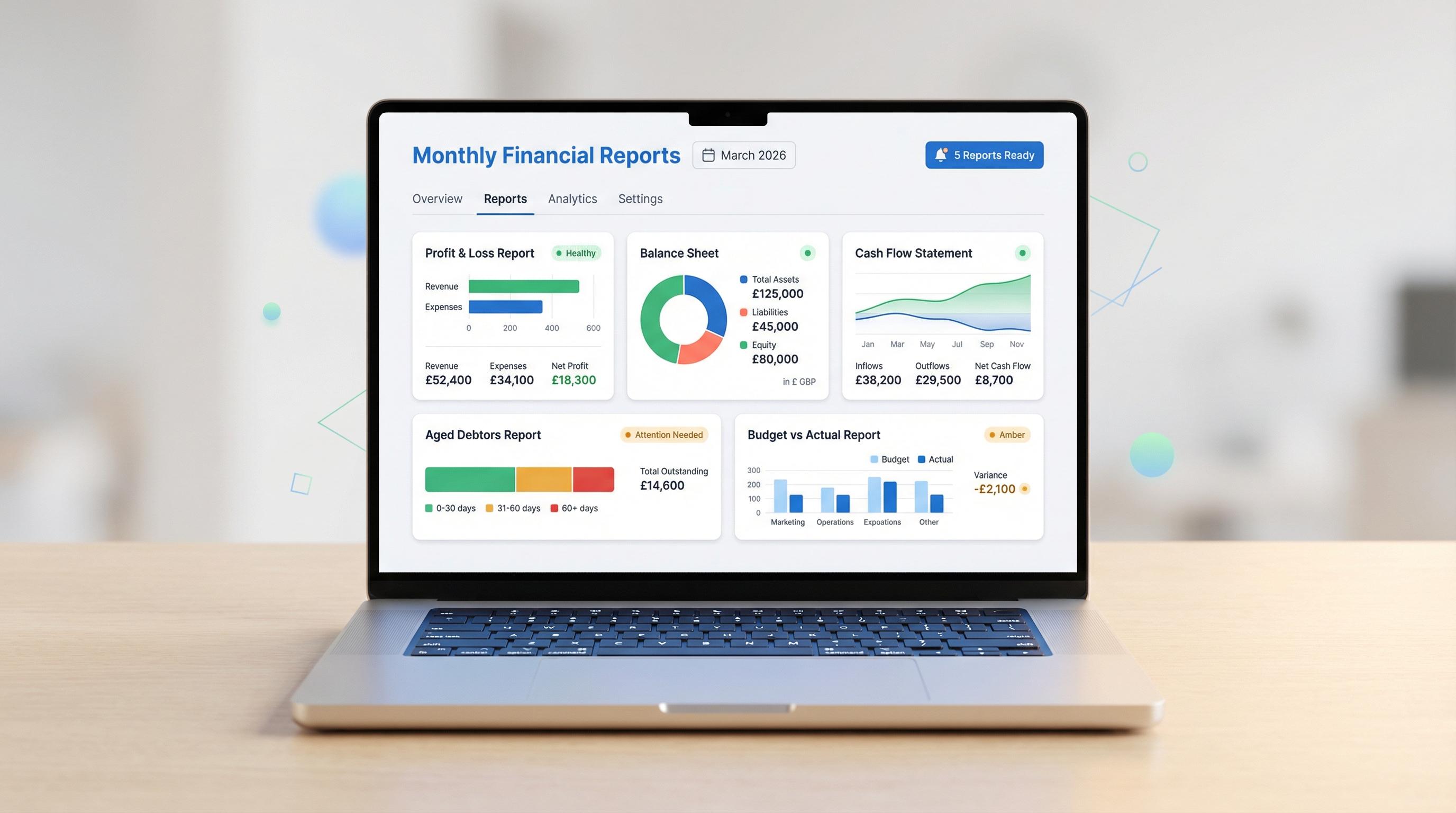
The P&L shows profitability. The cash flow statement explains why profit didn't turn into cash. The balance sheet shows where that profit ended up — tied up in invoices, stock, equipment, or sitting in the bank. Together, they give you the complete picture.
Sage Accounting generates all three reports automatically from the same underlying data — so you don't have to build them manually or wait for your accountant's quarterly update. You can check in any time you like.
How Sage Helps You Stay on Top of Both Numbers
This is the kind of problem that accounting software was built to solve. Specifically, here's how Sage helps you keep profit and cash in clear view at the same time:
Real-time P&L: Your profit and loss report updates automatically as you record transactions. No waiting until the end of the month to find out whether you're making money.
Cash flow statement: Sage generates the bridge between your profit and your bank balance, showing exactly where cash is going and why it differs from profit.
Aged debtors report: See exactly who owes you money, how much, and how overdue each invoice is. This is the single most useful tool for understanding why you're profitable but short on cash.
Sage Copilot for payment chasing: The AI assistant identifies overdue invoices and drafts chase emails for you — saving an average of 2.1 hours per week on collections alone.
Cash flow forecasting: On the Standard and Plus plans, Sage looks forward based on your open invoices and upcoming bills to predict future cash positions — so surprises become much rarer.
Anomaly detection: Copilot flags unusual transactions and potential errors before they distort your numbers.
Worth knowing: Sage's Standard plan (currently 90% off at £3.90/month for the first six months) includes cash flow forecasting, custom reports, and budgets — all the tools you need to understand and predict the gap between profit and cash.
The point isn't to make profit and cash match — they probably never will match exactly, and that's fine. The point is to understand why they differ and to make sure the gap isn't hiding a problem.
What to Do If Your Bank Balance Keeps Surprising You
If you constantly feel blindsided by a low bank balance despite healthy-looking profit figures, here are some practical habits that help.
Check Your Aged Debtors Weekly
The number one reason for the profit-cash gap is unpaid invoices. Make it a habit to review who owes you money at least once a week. Chase anything overdue promptly — the longer you leave it, the less likely you are to get paid. With 62.6% of invoices paid late across the UK, you can't afford to be passive about this.
Separate Your VAT Money
Don't let VAT collections sit in your main account where they look like spending money. Transfer an estimated amount to a separate account each time you receive a payment. When the quarterly bill arrives, you'll have it covered.
Track Capital Expenditure Separately
Before making a big purchase, check your cash flow — not just your profitability. You might well be able to afford the asset in profit terms (the depreciation will be small each month), but the immediate cash outflow could leave you short. Consider financing options for large purchases to spread the cash impact.
Plan Your Drawings
If you're a sole trader or company director, set a regular, predictable amount for drawings or dividends. Avoid the temptation to pull cash out every time the bank balance looks healthy — because that balance might include VAT owed, unpaid supplier bills, or money that's only there because a big purchase hasn't cleared yet.
Review Cash Flow Monthly — Not Just Profit
Most business owners check their P&L regularly but rarely look at the cash flow statement. Make it a monthly habit. It takes five minutes and will tell you far more about your financial health than the bank balance alone. Sage Accounting makes this easy — the report is always up to date and available in a couple of clicks.
Build a Cash Buffer
Aim to keep at least three months' worth of fixed costs in reserve. This won't stop the gap between profit and cash from existing, but it means that gap won't cause a crisis. If your fixed monthly costs are £5,000, having £15,000 set aside gives you breathing room for late-paying customers, unexpected tax bills, or quiet trading periods.
A simple monthly checklist:
Review your P&L — are you profitable?
Review your cash flow statement — where did the cash actually go?
Check your aged debtors — who owes you and how long have they owed it?
Check your aged creditors — what do you owe and when is it due?
Compare your bank balance to your available cash after setting aside VAT, tax, and upcoming commitments
If you're using Sage, every one of these reports is generated automatically. You just need to read them.
The Bottom Line
Your P&L and your bank balance will almost certainly never show the same number — and they shouldn't. They're different tools measuring different things. A healthy P&L with a low bank balance isn't a contradiction. It's a signal that your cash is tied up somewhere: in unpaid invoices, stock, loan repayments, tax obligations, or capital equipment.
The businesses that thrive aren't the ones where profit and cash magically match. They're the ones where the owner understands why they differ and keeps a close eye on both. That means running three reports — not just one. It means chasing invoices promptly, separating tax money, planning big purchases carefully, and reviewing cash flow as regularly as profit.
If this all feels like a lot to manage manually, it's worth exploring accounting software that does the heavy lifting. Sage Accounting gives you real-time access to your P&L, cash flow statement, aged debtors, and balance sheet — all from the same dashboard. And with Copilot chasing your overdue invoices automatically, you might find that gap between profit and cash starts narrowing on its own.
Disclaimer: This article is for general informational purposes only and does not constitute financial, tax, or legal advice. Every business situation is different, and you should consult a qualified accountant or financial adviser for guidance specific to your circumstances. Some links in this article are affiliate links — if you sign up through them, we may earn a commission at no extra cost to you. We only recommend tools we genuinely believe are useful for small businesses.